13-01-2026
How Taylor Swift’s Eras Tour Redefined Immersive Entertainment...


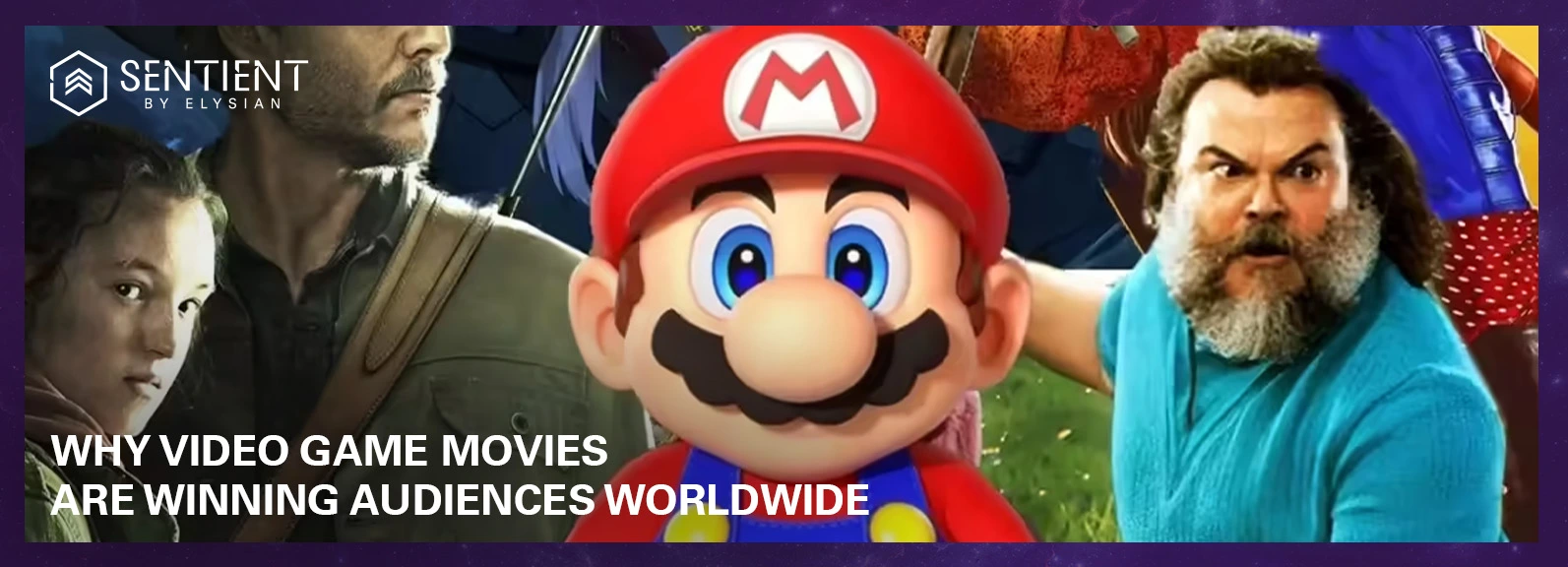
Video-game adaptations have evolved from risky experiments into some of the most exciting projects in modern entertainment. With games already built on rich worlds, emotional storytelling, and cinematic design, filmmakers now see them as ready-made universes. Breakthroughs in real-time engines, performance capture, AI, and LED volumes finally allow film to match game aesthetics. Meanwhile, global fandoms actively steer what gets made, and different countries reinterpret the same titles through unique cultural lenses. Beyond movies, this crossover fuels experiential marketing, turning branding into something audiences can play, feel, and inhabit — a new era of immersive storytelling.
When Gameplay Becomes Storytelling
Conclusion: The Future Is Playable
Video games aren’t just staying on our consoles anymore — they’re leaping from living rooms to cinemas around the world. From Tokyo to Toronto and Dubai to Milan, filmmakers everywhere are mining game universes for stories that are bold, visual, and already adored by millions. And honestly? It makes perfect sense. With worlds richer than many book series and characters we’ve practically grown up with, games have become a global playground for filmmakers looking to level up their storytelling.
What’s even more exciting is how these adaptations are being brought to life. Think VR-inspired camera moves, AI-powered animation, and VFX that finally do justice to the worlds we once explored with a controller (and questionable reflexes).
In this article, we’ll explore the evolution of game adaptations across continents, the tech powering them, the wins and misfires, and how studios everywhere are even turning marketing into a game — because audiences today don’t just want to watch; they want to play along.
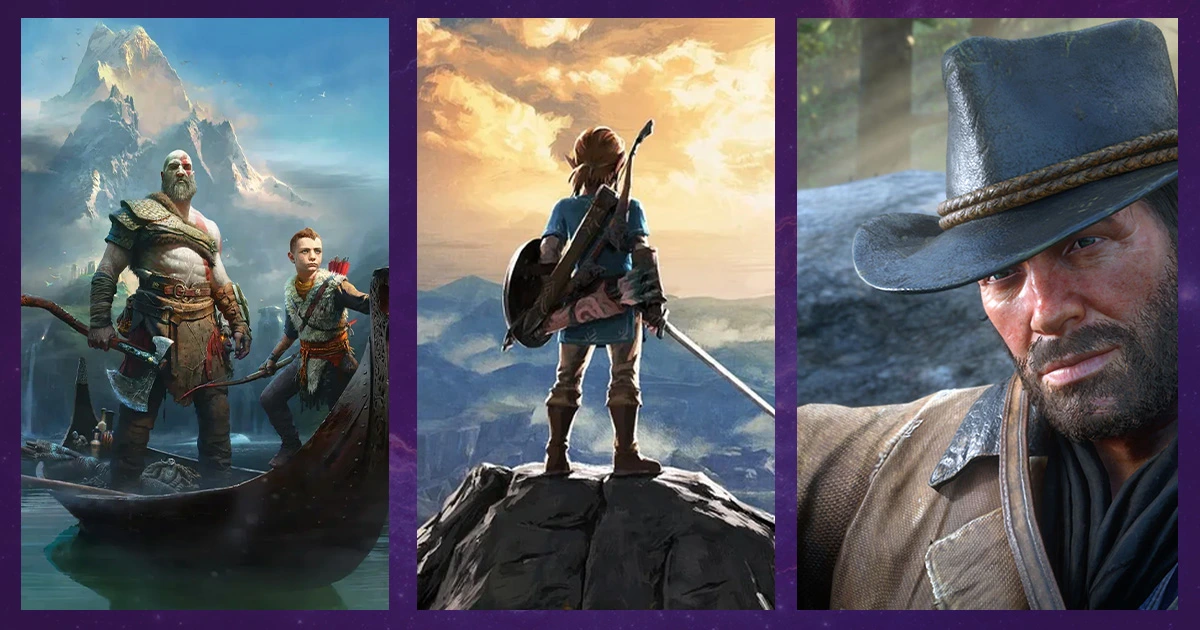
If you think about it, today’s biggest video games barely resemble the button-mashing chaos we grew up with. They’re sprawling emotional journeys—equal parts story, spectacle, and character study. And that’s exactly why filmmakers are flocking to them. Modern game design has quietly evolved into one of the most advanced narrative mediums on the planet, blending player agency with storytelling techniques Hollywood took decades to refine.
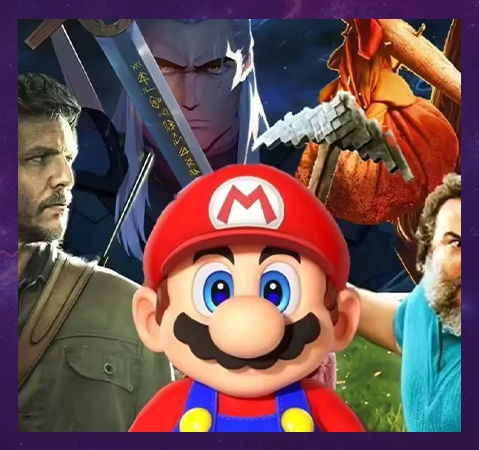
Games like The Last of Us, Red Dead Redemption 2, God of War, The Legend of Zelda: Breath of the Wild and the Ghost of Tsushima don’t just hand you missions; they immerse you in character arcs that unfold with the pacing of prestige television. Developers now hire screenwriters, playwrights, novelists, theatre directors, and even Hollywood cinematographers to build worlds that feel lived-in rather than coded. The result? Dialogue that carries emotional weight, landscapes that function like characters themselves, and story beats crafted with the same care as any top-tier screenplay.
Then there’s the way games handle perspective and pacing. Cutscenes have evolved into micro-films, complete with blocking, lighting, and score designed to evoke very specific feelings. And the camera—once a clunky floating device—now mimics real cinematography, from long takes to over-the-shoulder intimacy. Even gameplay moments are choreographed to feel like narrative beats: the slow walk before a big revelation, the quiet companion banter, the environmental storytelling tucked into every corner.
What makes this irresistible to filmmakers is simple: these stories already resonate. Players have spent dozens—sometimes hundreds—of hours inhabiting these worlds, forming attachments far deeper than a two-hour film can achieve alone. When a game already feels like a movie you played rather than watched, adapting it for the big screen becomes less of a gamble and more of an invitation. It’s no wonder directors are lining up to bring these “interactive epics” to a wider audience.

For years, video-game movies suffered from the same curse: the worlds gamers adored simply couldn’t be recreated convincingly on screen. The technology just wasn’t there. But over the last decade, a perfect storm of innovation has completely rewritten what’s possible, and suddenly, game universes look better in films than they ever did in our heads.
Start with real-time rendering engines like Unreal and Unity. What used to take hours to render now happens instantly, giving filmmakers the ability to walk through digital spaces as if they’re on location. Directors can tweak lighting, angles, and atmosphere on the spot—something that was science fiction even 10 years ago. This means films can translate the exact mood and visual DNA of a game world with startling precision.
Then there’s performance capture, which has evolved from awkward gray suits to hyper-detailed rigs that capture the tiniest twitch of an eyebrow. Characters once considered “unfilmable” because they were too stylized or too weird now come to life with human nuance. Think of how Avatar, Planet of the Apes, and more recently The Last of Us have pushed this tech into emotional territory.
Add to that the rise of volumetric capture, LED volumes, and AI-assisted animation. These tools allow massive environments to be built without giant green-screen warehouses, and they let characters blend seamlessly into digital worlds instead of floating awkwardly in them. Directors no longer have to guess what the final scene will look like—they can see it live, in real scale.
And perhaps the most game-changing aspect? AI-driven upscaling and texture generation. Instead of armies of artists repainting game aesthetics by hand, AI models can now replicate the original style while elevating it to film quality.
This tech isn’t just making adaptations prettier—it’s finally closing the gap between what gamers imagine and what filmmakers can deliver. And that’s why video-game movies suddenly feel like they belong on the big screen.
If there’s one force studios can’t afford to underestimate anymore, it’s gamers. These aren’t passive audiences waiting politely for a trailer — they’re loud, hyper-organized, meme-powered communities that can make or break an adaptation before a single frame is shot. And studios have learned, sometimes painfully, that fandoms aren’t just part of the conversation; they are the conversation.
Look at the way projects get greenlit now. Developers and studios scan Reddit threads, Discord servers, YouTube reactions, and even speedrunning communities to figure out which characters or story arcs have the deepest emotional grip. Fans don’t just “like” something — they campaign for it. They cast their dream actors. They dissect leaks. They drop petitions with thousands of signatures telling studios exactly what they want (and exactly what they don’t).
And when studios ignore those signals? Well… remember the original Sonic? Within 24 hours of that trailer dropping, fandom pressure turned into a full-blown cultural moment — memes, outrage, redesign demands. Instead of doubling down, the studio listened, fixed the design, and ended up with a surprise hit and a whole new trust equation with fans.
What makes player communities especially influential is that they’ve already invested hundreds of hours in these worlds. They know every lore detail, every personality quirk, every broken bit of canon. They’re not judging adaptations as movies — they’re judging them as interpretations of something they deeply love. That emotional investment amplifies both praise and backlash.
As a result, studios now treat fans as partners rather than nuisances. They share early concept art, do creator AMA sessions, drop behind-the-scenes snippets, and even tweak scripts after community feedback. It’s a strange new ecosystem where fandoms don’t just react to adaptations — they actively steer them.
One of the most intriguing shifts in game-to-film adaptations is how different regions reinterpret the same IP through their own cultural lens. The era of one-size-fits-all Hollywood retellings is fading. Today, creators around the world are reshaping familiar digital universes with new aesthetics, emotional rhythms, and storytelling priorities — and audiences are responding to that diversity.
Japan has long mastered this. Their adaptations often prioritize emotional sincerity, character introspection, and stylized theatricality. Even when the game worlds are over-the-top, the heart of the story feels intimate and deeply human. It’s why Japanese live-action game adaptations tend to resonate strongly within their own market: they’re built around relationships and identity rather than set pieces alone.
Hollywood, by contrast, plays the spectacle card. American studios excel at pace, polish, and global clarity — turning complex lore into streamlined, high-energy narratives. The goal isn’t to replicate every detail of a game; it’s to make the experience digestible for viewers who may not know the source material at all. Hence the bigger explosions, cleaner arcs, and more universal emotional beats.
Europe often brings a moodier, more atmospheric approach. There’s a grounded realism in European adaptations — morally complex characters, slower pacing, a love for ambiguity, and visual palettes that lean gritty or art-house. Even when the worlds are fantastical, European creators tend to dig into the psychological or political subtext beneath the surface.
And then you have the Middle East, especially hubs like Dubai, stepping into the conversation in a different but fascinating way. The region is becoming a global production playground for sci-fi and fantasy — with massive soundstages, LED-volume tech, and an appetite for futuristic aesthetics. Middle Eastern filmmakers and studios are increasingly exploring game-inspired storytelling, especially worlds rooted in desert mythology, cosmic fantasy, and neo-futurism. Instead of adapting existing IPs wholesale, they’re reimagining how regional folklore and game-like worldbuilding can merge — giving familiar tropes a distinctly Gulf identity.
What emerges from all this is a global remix: the same game universe can feel poetic in Tokyo, high-octane in Los Angeles, atmospheric in Berlin, and futurist-mythic in Dubai. That cultural re-skinning is exactly what’s making game adaptations feel fresher than ever.

The explosion of game-to-film adaptations hasn’t just reshaped entertainment — it’s reshaped how the entire world thinks about engagement. As audiences got used to stories they could play and games they could watch, a new expectation formed: brands shouldn’t just be seen… they should be felt.
This shift is everywhere. Inspired by the interactivity of games and the cinematic immersion of modern adaptations, marketers across industries are building campaigns that behave like experiences — not announcements. AR billboards you can unlock, interactive DOOH screens that respond to your movement, mall-wide quests, AI-personalized brand journeys, and mixed-reality pop-ups all borrow directly from gaming logic: give the audience agency, reward curiosity, and let them shape the moment.
The crossover energy is wild. Retail borrows from open-world exploration through virtual try-ons and sensory zones. Automotive brands build VR “levels” instead of test drives. Tourism boards use AR storytelling to turn cities into playable maps. Even banks are gamifying financial education with challenges and progression systems — think “level up your savings,” literally.
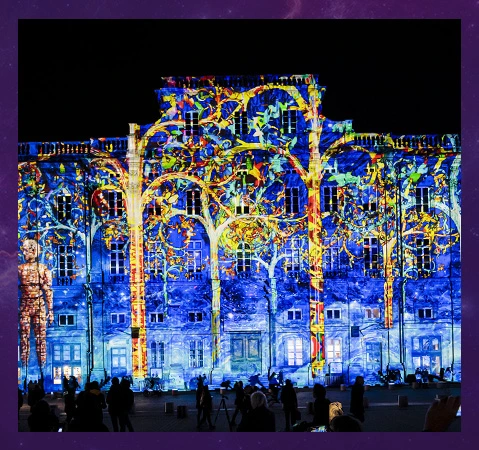
Dubai has become one of the most exciting laboratories for this transformation. Malls are running AR treasure hunts inspired by blockbuster worlds, airports are creating cinematic tunnel experiences, and studios like Sentient By Elysian are building responsive installations where light, motion, and AI react to the audience in real time. Their mechatronics-driven experiences feel like stepping into a scene — a form of playable storytelling that mirrors how game adaptations break the fourth wall and invite you into the world.
And the reason all of this works is beautifully simple: Interactivity sparks emotion, and emotion makes brands unforgettable. When people participate, they don’t just observe — they connect.
Experiential marketing isn’t a side trend anymore; it’s the new creative language of a world raised on games, shaped by cinema, and hungry for stories they can walk through. Brands that embrace this aren’t just marketing — they’re building worlds people actually want to be part of.
What started as a gamble — turning pixelated adventures into big-screen spectacles — has quietly evolved into one of the most transformative creative movements of our time. Video-game adaptations didn’t just prove that games could make great movies; they rewired how audiences expect to experience stories altogether. Today, the line between playing, watching, and participating has all but disappeared, and that shift is reshaping everything from global filmmaking to brand strategy.
As technology dissolves old limits and fandoms fuel entire creative ecosystems, game worlds are no longer confined to consoles. They move across continents, cultures, and industries, reinventing themselves with every reinterpretation — intimate in Japan, explosive in Hollywood, atmospheric in Europe, mythic in the Middle East. Each adaptation becomes a cultural remix, proving that the same universe can live a hundred different lives.
And outside theaters, the logic of gaming has seeped into the real world. Brands now build experiences instead of ads. Cities become playgrounds. Marketing behaves like a quest. Interactive installations turn audiences into co-authors. Whether it’s a film premiere, a retail launch, or a tourism campaign, the message is the same: don’t just watch — step in.
In a way, this moment feels less like the “rise” of video-game movies and more like the reveal of a much bigger truth: we’re living in a world where people want agency, immersion, and emotional connection — the same things great games have offered for decades.
And as long as creators keep embracing that desire to play, the stories we love won’t just expand… they’ll evolve into worlds we can inhabit, explore, and experience in ways we’ve only begun to imagine.
Website | LinkedIn | Instagram | YouTube | Facebook