13-02-2026
ISE 2026: A Record-Breaking Showcase of Innovation in AV, Event Technology & Immersive Exp...


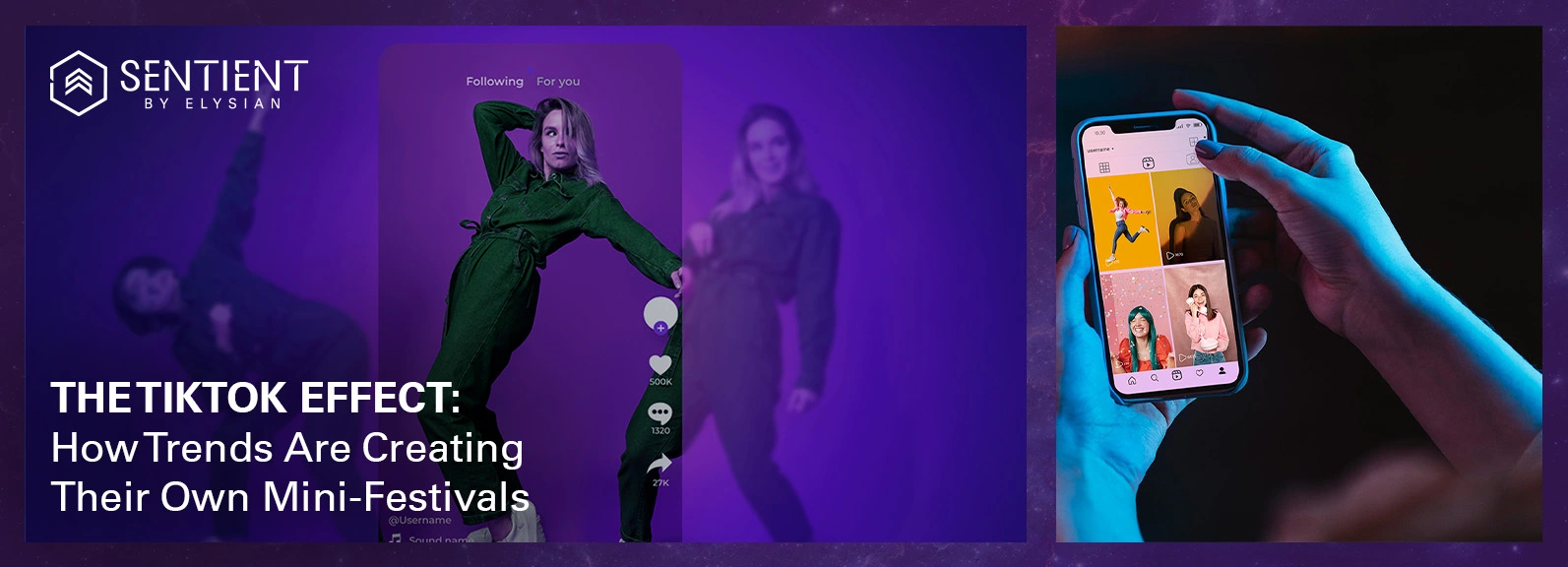
TikTok trends no longer exist only on screens — they unfold as shared cultural moments experienced by millions at once. From viral dances and sounds to aesthetics and behaviors, these trends function like mini-festivals: temporary, immersive, and driven by participation rather than place. Powered by the algorithm, built through recognizable symbols, and amplified through mass remixing, they shape how people dress, move, gather, and connect both online and offline. As trends spill into real-world spaces and form short-lived communities, TikTok reveals a new model of collective experience — one defined by timing, attention, and the feeling of having been there together.
From Viral Moment to Collective Experience
Algorithm as the New Event Organizer
Sounds, Styles, and Symbols: The Building Blocks of a Trend
Pop-Up Culture: When Trends Spill Into the Real World
The Rise of Temporary Communities
What starts as a 15-second video on TikTok rarely stays that small. A dance, a sound, a phrase, or an aesthetic can quickly grow into something bigger—shared by millions, remixed endlessly, and experienced collectively within a short window of time. These trends don’t just go viral; they create moments. For a few days or weeks, TikTok users participate in the same rituals, wear the same looks, and move to the same soundtrack, forming what feels like a digital gathering. In effect, TikTok trends are becoming mini-festivals—temporary, immersive, and driven not by location, but by attention.
To understand how these fleeting moments turn into collective experiences, it’s worth examining how a single viral trend evolves from an individual post into something shared by millions.
A TikTok trend rarely announces itself as a “movement.” It begins quietly—one creator posts a video, another recreates it, and suddenly a recognizable pattern starts to form. What transforms that pattern into a collective experience is participation at scale. Users aren’t just watching; they’re performing, remixing, and adding their own spin. This shift from passive consumption to active involvement is what gives TikTok trends their festival-like quality.
Take the “ Renegade ” dance , which exploded beyond TikTok into school hallways and talent shows, or the “ Bing Bong ” sound trend , where users built elaborate comedic skits around a simple audio clip. More recently, # BookTok reading recommendations have driven entire publishing surges, and challenges like “ Silhouette Challenge ” turned everyday videos into a collective showcase of creativity. Each of these trends acted like a temporary cultural moment—shared, recognizable, and intensely participatory.
Unlike traditional events that require planning, tickets, or physical presence, TikTok trends are frictionless. Participation is immediate and open. Anyone with a phone can join, whether by mastering a choreography, using a trending sound, or adapting the concept to their own context. The result is a shared moment happening simultaneously across time zones, cultures, and demographics—no wristband required.
Timing plays a critical role. Trends are intense but short-lived, often peaking within days or weeks. This built-in urgency encourages users to join now , before the moment passes. Much like a pop-up festival or weekend rave, the value lies in being part of it while it’s happening. Miss it, and you’re already late.
What makes these moments feel communal is their recognizability. A user scrolling their feed doesn’t need an explanation; the sound, format, or visual cue instantly signals that they’re “inside” the trend. Comment sections become meeting points, stitched videos turn into conversations, and duets act as call-and-response interactions.
In this way, TikTok doesn’t just host trends—it orchestrates shared experiences. Each viral moment becomes a temporary gathering, defined not by geography, but by attention, participation, and a collective sense of “we were all there.”
If real-world festivals have DJs and stages, TikTok has its algorithm — and it’s the ultimate party planner. TikTok’s For You feed isn’t random; it’s finely tuned to surface content that’s engaging, repeatable, and remixable . That means when a sound, format, or challenge starts catching on, the algorithm amplifies it rapidly, placing it in front of millions of users who are most likely to try it themselves. The result? A decentralized “crowd” that forms without a venue, performer, or scheduled start time.
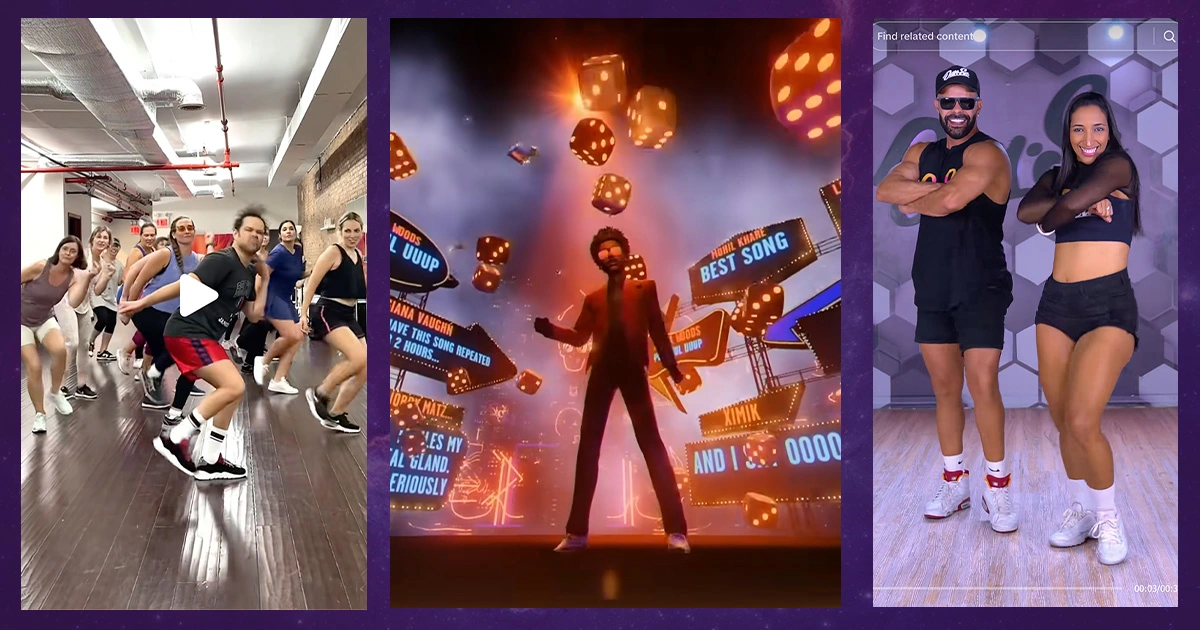
Consider how the “ Blinding Lights” dance challenge zoomed across feeds in late 2019. The song’s upbeat rhythm and easy-to-learn choreography hit the algorithm sweet spot — and suddenly millions were recording their versions in kitchens, backyards, and classrooms. The trend didn’t need posters or promos; the algorithm pushed it into enough screens that participation snowballed organically.
TikTok’s recommendation system thrives on two things: patterns and participation. When a video gets high completion rates, reuses a trending sound, or sparks duets and stitches, the algorithm interprets that as potential energy — a trend waiting to explode. That’s why seemingly random clips can become cultural moments overnight: a snippet of a song , a quirky sound byte , or an odd animation can all balloon into mass participation once the algorithm gives it room to breathe.
What’s fascinating is how this “ algorithmic curation ” democratizes cultural moments. You don’t need celebrity status or a brand budget; all you need is something that clicks with the feedback loop. Thousands contribute, remix, react, and amplify — and suddenly you have what looks and feels like a shared event.
In essence, TikTok’s algorithm acts as the invisible festival organizer: no stages, no tickets, just data-driven momentum that turns individual clips into collective cultural moments.
Every TikTok mini-festival has its own unofficial dress code, soundtrack, and set of inside jokes. These trends work because they’re built from easily recognizable elements that signal belonging. A specific sound , visual style , or repeated phrase acts like a wristband — if you get it, you’re in.
Sounds are often the starting point. A short audio clip can trigger thousands of videos, each different but instantly familiar. Think of how “ Makeba” by Jain resurfaced years after its release, or how sped-up tracks and obscure voiceovers suddenly dominate feeds. Music becomes less about the artist and more about the moment — a looping anthem shared by millions.
Visual identity matters just as much. Trends like “ That Girl ” , “ Clean Girl Aesthetic” , or “ Coquette-core” rely on consistent imagery: muted color palettes, specific outfits, lighting styles, and even facial expressions. Users aren’t copying blindly; they’re interpreting a shared aesthetic language. The repetition creates cohesion, while small personal twists keep the trend alive.
Then there are symbols and phrases — the shorthand of TikTok culture. Catchphrases like “ It’s the ___ for me ” , “ Core memory unlocked ” , or “Main character energy ” spread quickly because they’re adaptable. They work across cultures, topics, and formats, allowing anyone to plug into the trend without starting from scratch.
What makes these elements powerful is how low the barrier to entry is. You don’t need expensive gear or professional editing. A phone, a trending sound, and a basic understanding of the visual cues are enough. This accessibility fuels mass participation and gives trends their festival-like density — thousands of variations, all instantly recognizable as part of the same moment.
Together, these sounds, styles, and symbols form the infrastructure of TikTok’s pop-up culture — temporary, immersive, and instantly legible to anyone scrolling at the right time.
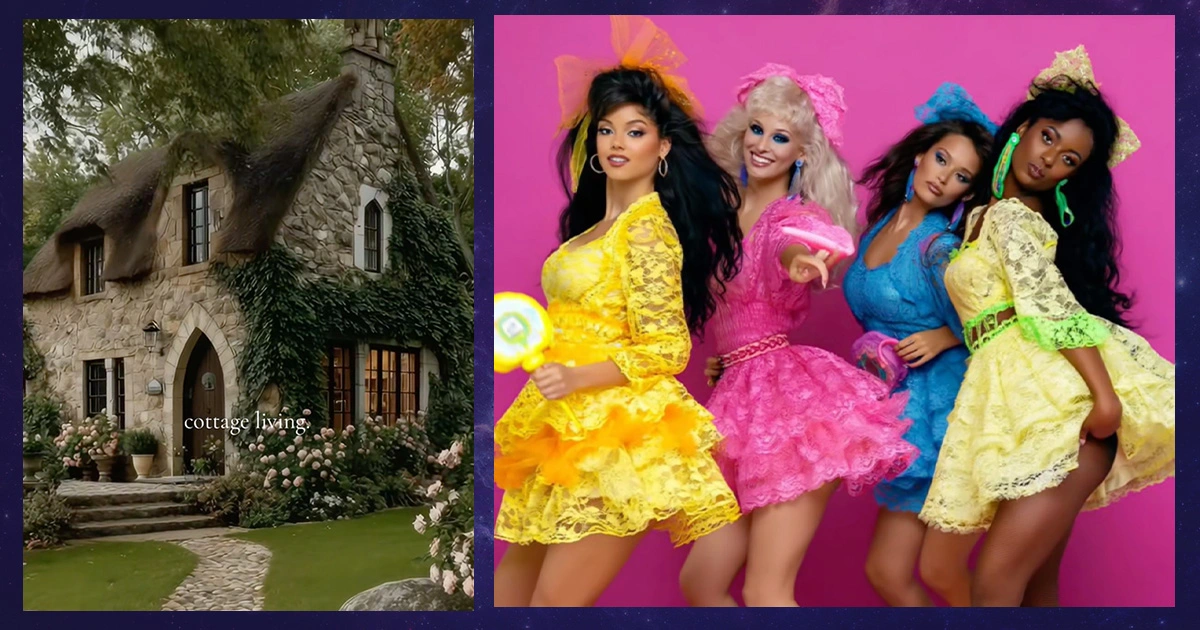
While TikTok trends are born online, many refuse to stay there. As participation grows, these digital moments often jump off the screen and into physical spaces, turning online enthusiasm into real-world pop-ups. With over one billion monthly active users , TikTok has the scale to turn niche trends into mass behavior almost overnight.
Dance trends are the most visible example. TikTok-fueled choreographies regularly appear at concerts, weddings, school events, and sports games , transforming everyday spaces into temporary stages. Meanwhile, aesthetic-driven trends like “ Cottagecore ” or “ Barbiecore ” have shaped fashion collections, café interiors, and even event themes. According to TikTok’s own insights, a majority of users say the platform influences how they dress, where they go, and what they buy — blurring the line between inspiration and action.
Brands and locations feel this impact almost immediately. Studies consistently show that TikTok users are significantly more likely to purchase or visit something after seeing it on the app , especially when the content feels organic rather than promotional. Restaurants sell out of viral menu items within days. Makeup products trend, disappear from shelves, and reappear months later once the hype cools. Travel spots experience sudden spikes in visitors thanks to viral itineraries and “must-film” locations.
What makes these moments festival-like is their temporary intensity. Attention peaks fast and fades just as quickly. Once the trend moves on, so does the crowd. The appeal lies in being there during the moment — capturing it, sharing it, and participating before it slips out of the cultural spotlight.
One standout agency turning brand moments into memorable cultural touchpoints is Sentient By Elysian . Rather than simply delivering messages, they design immersive environments and interactions that invite people to step inside the story — experiences that stay with audiences long after the moment has passed. The result isn’t just visibility, but meaningful connection, where brands earn recognition while building genuine affinity. Watch how Sentient brings these experiences to life .
What ultimately turns TikTok trends into mini-festivals isn’t just the content — it’s the communities that form around it. At the height of a trend, users don’t simply participate; they recognize each other. For a brief window, shared references replace introductions, and belonging is signaled through sounds, formats, and inside jokes.
Communities like FinanceTok , StudyTok , and FoodTok show how quickly these gatherings can form. A single budgeting format, study routine, or recipe template can generate thousands of near-identical videos, each reinforcing the sense that a collective moment is underway. In FashionTok , users rally around micro-trends — from specific silhouettes to styling rules — before abandoning them just as quickly. These aren’t long-term identities; they’re time-bound gatherings shaped by relevance.
Other communities are built around behavior rather than aesthetics. NPC Live TikTok , where creators perform repetitive, game-like interactions in real time, created a strange but unmistakable sense of shared spectacle. Viewers didn’t just watch — they influenced outcomes through comments and virtual gifts, blurring the line between audience and participant. Similarly, Side Hustle Tok surged during economic uncertainty, with users trading advice, templates, and cautionary tales in a fast-moving, peer-driven space.
What unites these communities is their impermanence. Engagement peaks quickly, driven by novelty and algorithmic momentum, and then fades as attention shifts. Yet during their brief lifespan, they offer something compelling: structure without obligation. You can join instantly, contribute once or many times, and leave without explanation.
Like festivals, these TikTok communities thrive on presence. Being there matters more than staying forever. And when they disappear, what remains isn’t membership — it’s the shared memory of having been part of a moment that only made sense while it was happening.
TikTok hasn’t replaced traditional festivals — it’s redefined what a cultural gathering can look like. Instead of stages and schedules, today’s mini-festivals are built from sounds, formats, and shared attention. They appear suddenly, peak loudly, and disappear without cleanup crews or closing ceremonies. Their power lies in participation, not permanence.
What makes these moments distinct is how accessible they are. There’s no cost of entry, no geographic limit, and no fixed audience. Anyone can join, contribute, or remix the experience in real time. The result is a culture that feels more fluid and responsive — shaped collectively rather than curated from the top down.
These trends also reveal something deeper about how people connect online. In an era of endless content, users aren’t just looking to watch; they want to belong, even briefly. TikTok trends offer that belonging without pressure — a shared moment that asks only for attention and creativity, then lets you move on.
As platforms continue to shape how culture forms and fades, these algorithm-driven gatherings may become the norm rather than the exception. They are fast, participatory, and fleeting by design. And much like the best festivals, their value isn’t measured by how long they last — but by how vividly they’re remembered while they’re happening.
Website | LinkedIn | Instagram | YouTube | Facebook