4-02-2026
Why NONOTAK Is the Next Big Name in Immersive Art...


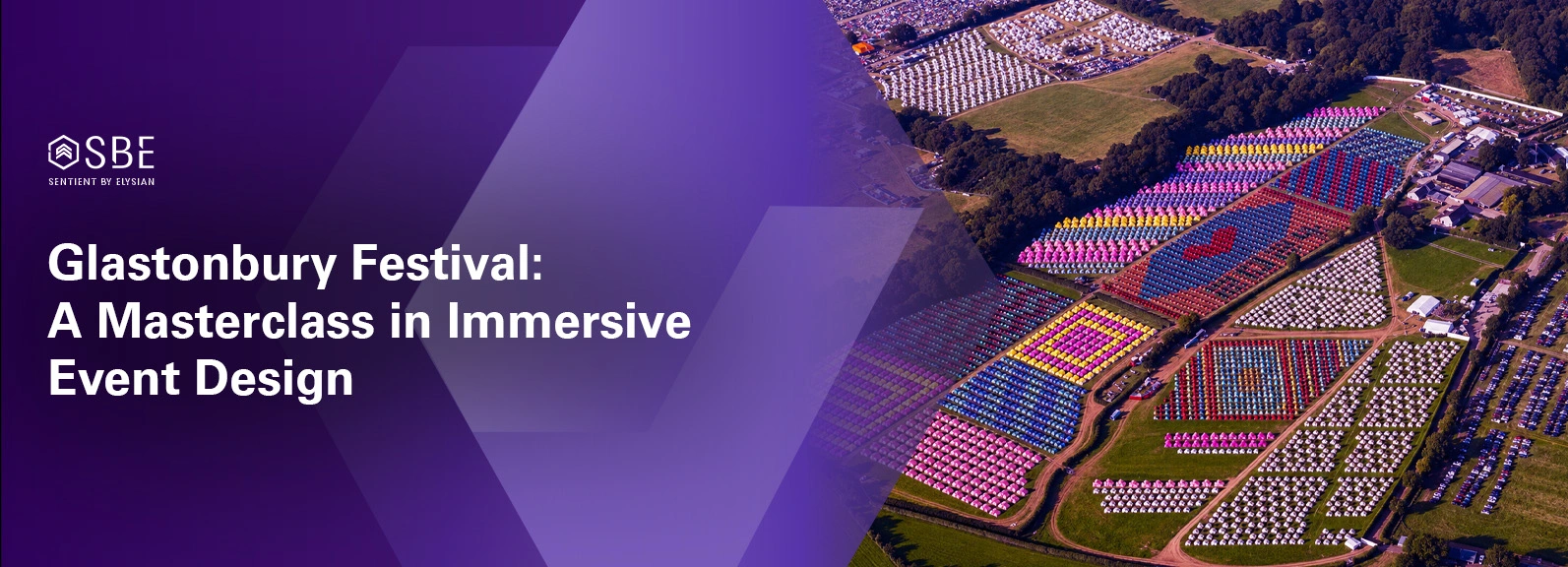
For five days each year, a dairy farm in Somerset can become one of the most technologically advanced cities on Earth, as demonstrated by the Glastonbury Festival's long-standing history. Rather than being limited to the headline sets and spilling mud, Worthy Farm is a living example of event design at large, where lighting, kinetic sculpture, projection mapping, and sound engineering are all used to create an immersive urban experience. Visitors can walk across the fields in this space. Few events demonstrate the power of immersive environmental design as clearly as Glastonbury. Decades of experimentation with lighting, stage architecture, and storytelling have made the festival one of the world's most influential references for experience designers.
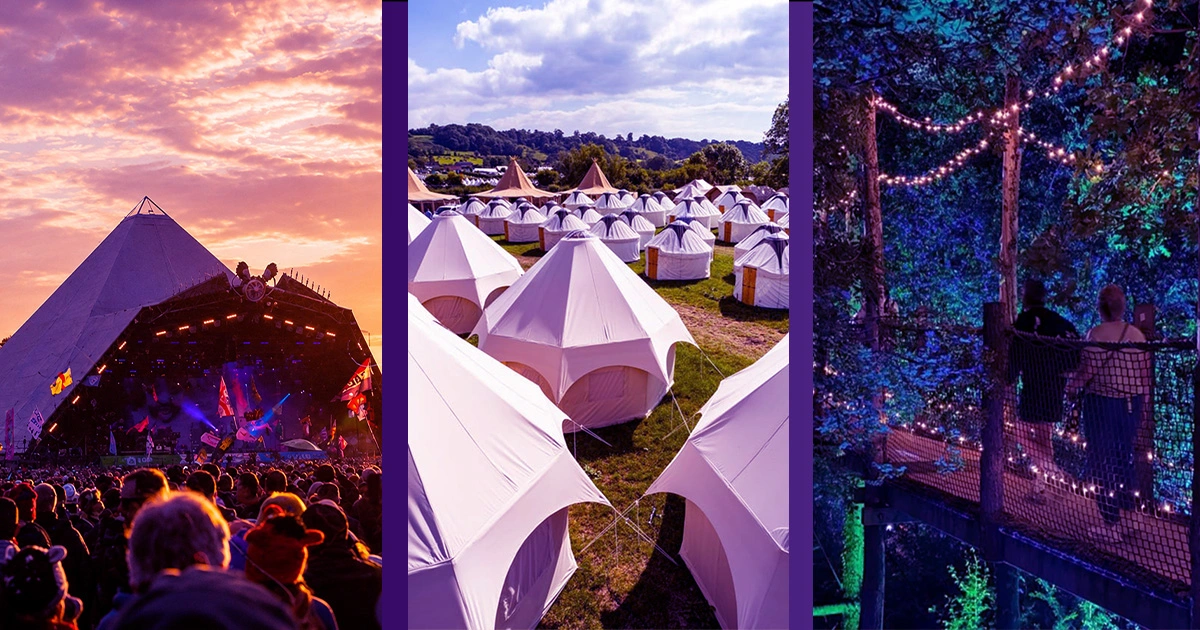
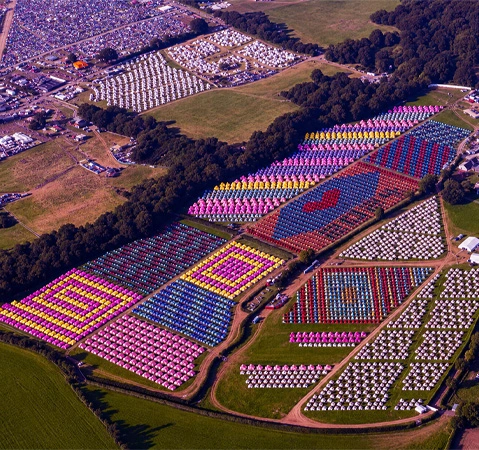
For most of the year, Worthy Farm is exactly what it has always been, a peaceful working dairy farm in the Somerset countryside. Then, almost overnight, everything changes. Fields become streets. Empty land turns into neighbourhoods. More than 200,000 people arrive, and for five remarkable days, the farm becomes a fully functioning city with its own power network, water supply, medical centres, recycling systems, and even its own policing operation.
It's an extraordinary transformation, but what makes Glastonbury truly remarkable isn't just the sheer scale of it all. Behind the music and the crowds lies one of the most sophisticated event environments in the world. Every light, stage, pathway, and installation is carefully designed to shape the experience, blending immersive technology, creative engineering, and storytelling into a temporary world that feels alive. Then, almost as quickly as it appeared, the city disappears, leaving behind nothing more than a working farm and memories that last far longer than the festival itself.
There's a reason event professionals around the world keep an eye on Glastonbury. Every edition begins with the same seemingly impossible task: turning open farmland into a fully functioning city, then returning it to nature just days later.
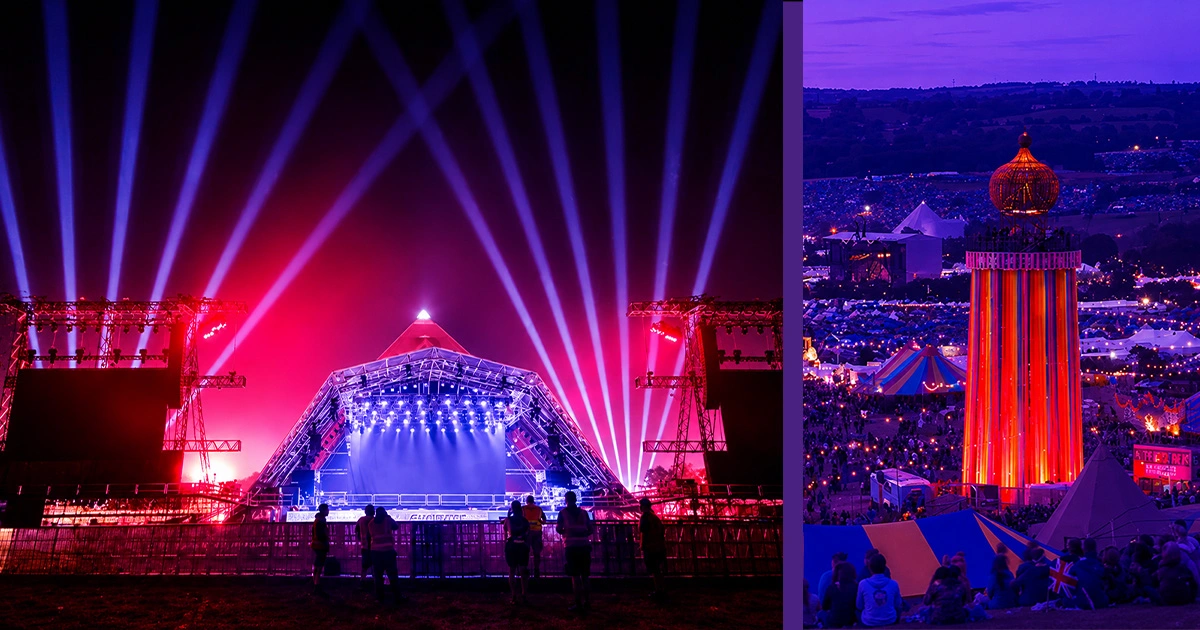
That means every stage, lighting tower, speaker array, pathway, and installation has to be carefully planned long before the first visitor arrives. Everything needs to withstand unpredictable weather, support hundreds of thousands of people, and come apart almost as quickly as it was built. It's a challenge that demands as much creativity as it does engineering.
Behind the scenes, technology quietly holds the experience together. Lighting transforms familiar spaces after dark. Immersive sound carries across vast landscapes without overwhelming them. Temporary structures become landmarks, while projection, visual effects, and stage design turn performances into shared moments that linger long after the music ends.
For designers and production teams, Glastonbury has become more than a festival; it's a source of inspiration. Its approach to crowd movement, immersive environments, and temporary architecture continues to influence events around the world, proving that the most remarkable experiences aren't defined by how permanent they are, but by how completely they bring people together.
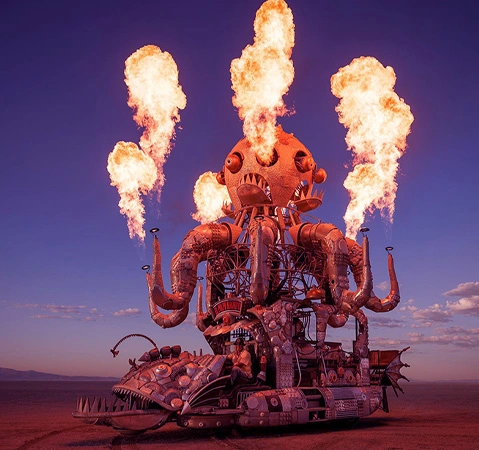
After sunset, Glastonbury's character changes entirely. Fields that felt pastoral by day become canvases for large-scale lighting and kinetic art after dark. Nowhere is this more visible than at Arcadia, the festival's dedicated late-night arena, where a series of monumental mechanical sculptures has become as iconic as any headline act.
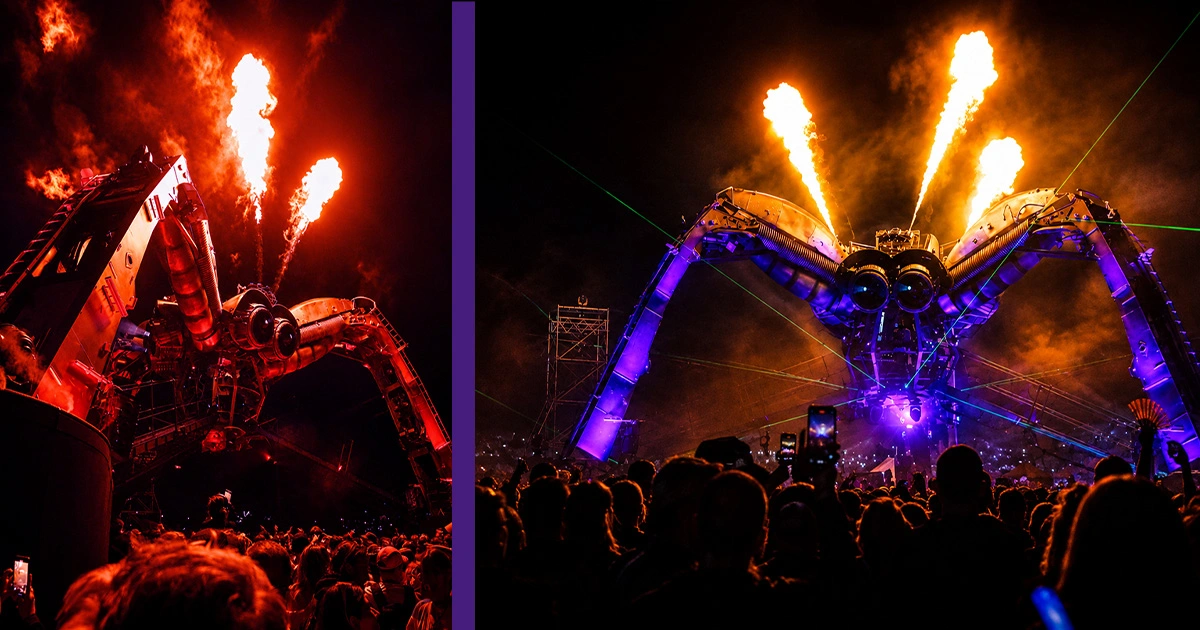
The Arcadia stages are engineering feats built almost entirely from repurposed industrial machinery, decommissioned scanning units, spy-plane engines, submarine moulds, and helicopter parts reassembled into towering, fire-breathing structures. Recent incarnations have paired custom video panels, laser wings visible for miles, and projection mapping across the creature's body, layering flame cannons and haze effects with programmable lighting cues synced to the DJs performing inside. It's a masterclass in blending raw structural engineering with contemporary lighting design, proof that immersive technology doesn't need to be sleek to be sophisticated; it needs to be intentional.
Elsewhere on site, the Pyramid Stage has spent five decades evolving its own lighting language, from atmospheric, sculptural rigs designed for Radiohead's performances to elaborate projection and laser work for acts pushing visual storytelling as far as the music itself. Across the farm, this same instinct repeats: light isn't decoration, it's dramaturgy.
What separates Glastonbury's approach to event design from a conventional concert production is that its stages are treated as characters, not backdrops. A structure like Arcadia's centerpiece isn't simply lit, it performs, its limbs and wings choreographed to move, flame, and pulse in time with the music. Crowds don't just watch these stages; they orient entire nights around them, migrating across the farm as different structures come alive after dark.
This kinetic approach to stage design has quietly influenced event technology far beyond music festivals, from experiential brand activations to large-format installations at cultural events worldwide, where the same principles apply: repurposed materials, programmable lighting, and structures built to move rather than sit static. The lesson event designers keep taking from Worthy Farm is that scenography and technology work best when they're inseparable from performance itself.
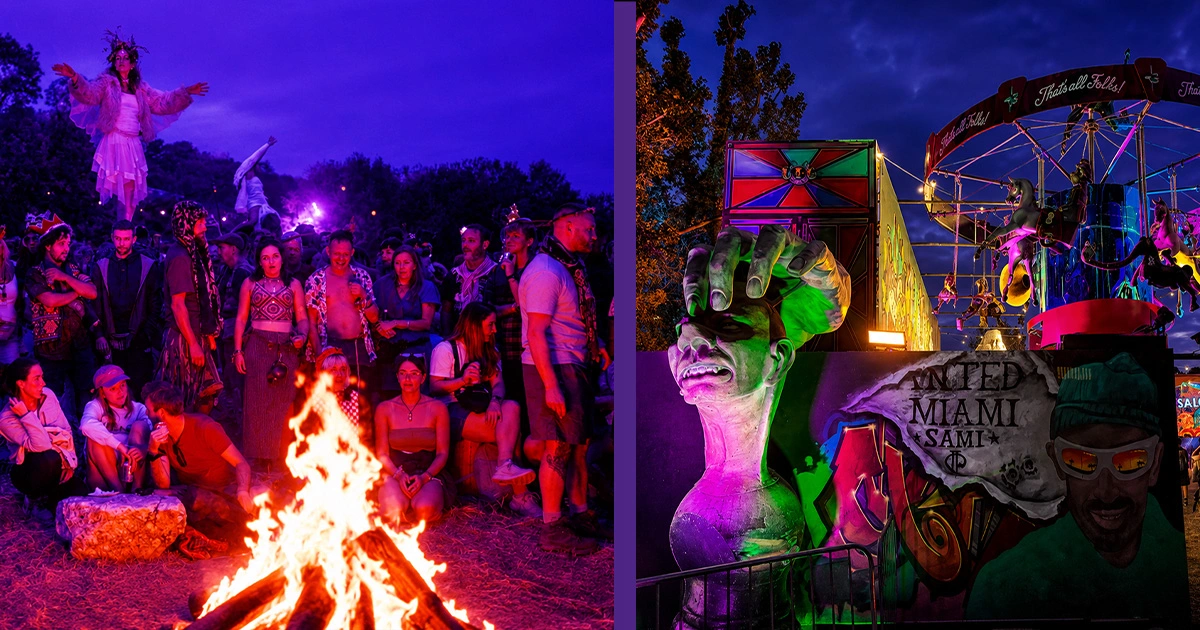
For all its size and production value, Glastonbury never feels like it's trying too hard to impress. What stays with people isn't the brightest spotlight or the biggest screen, but the moments when technology quietly supports the experience. A stage that seems to breathe with the music. A perfectly timed lighting cue that builds anticipation before a performance begins. These are the details that shape how a moment feels, often without the audience even realizing why.
It's an approach that's becoming increasingly important in experiential design. Rather than using technology simply because it's available, designers are using light, sound, and interactive elements to create atmosphere, guide emotion, and strengthen the connection between people and place. The goal isn't to overwhelm visitors with effects, but to create experiences that feel immersive, personal, and memorable. It's the same thinking behind many of today's leading festivals, exhibitions, and brand activations, where digital technology blends seamlessly into the physical environment instead of competing with it.
That philosophy extends far beyond Glastonbury's main stages. Wander into the Healing Fields, stumble across an unexpected art installation, or follow the glow into one of the festival's hidden late-night spaces, and you'll find the same attention to detail. Every area has its own mood, rhythm, and identity. The technology fades into the background, leaving visitors free to explore, discover, and lose themselves in the experience. In the end, it's not the equipment people remember; it's the feeling of being there.
Glastonbury remains a benchmark for immersive event design because every element works together to create a single, memorable experience. Infrastructure, lighting, architecture, and storytelling aren't separate disciplines; they become one environment.
For experience designers, Glastonbury is more than a festival; it's a living case study in how technology, design, and storytelling create places people don't just visit, but remember. The scale may change, but the principle remains the same: the best experiences aren't built around technology; they're built around the people experiencing it.
Website | LinkedIn | Instagram | YouTube | Facebook